About me
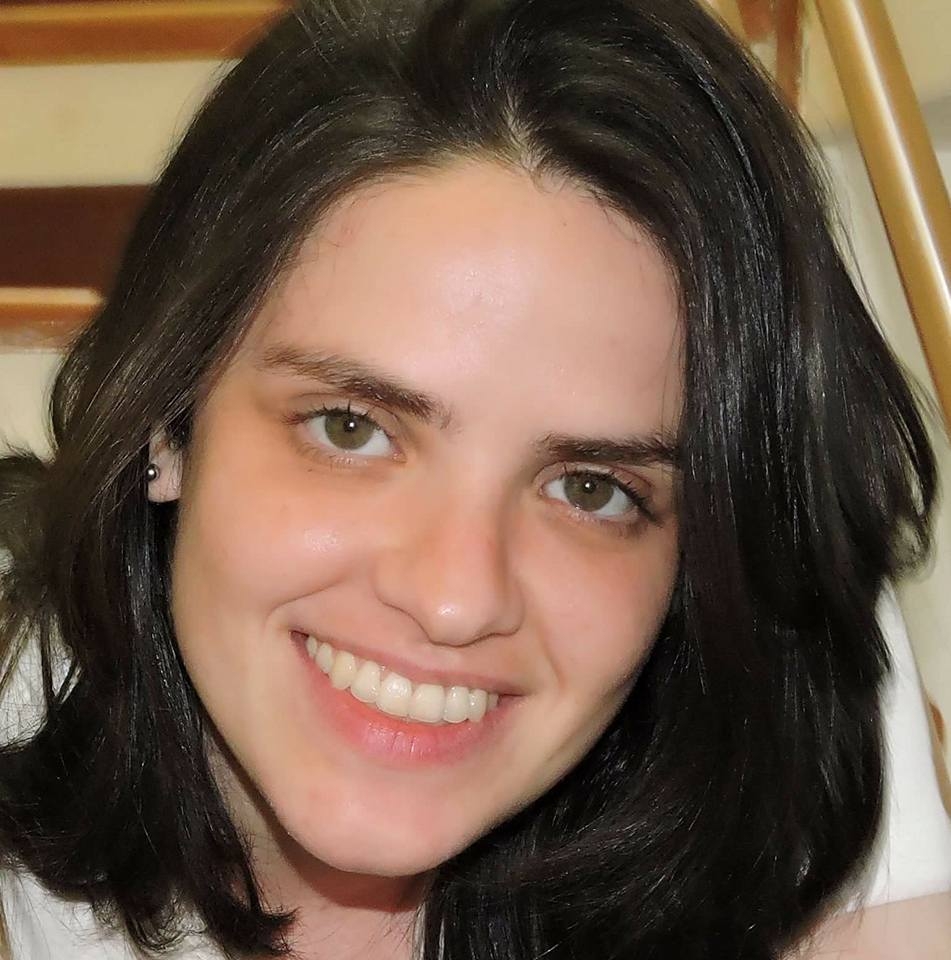
Hello! I’m Ana.
I am a Data Scientist with a background in Applied and Computational Mathematics and Electrical Engineering. My career bridges academic research and practical applications, combining mathematical modelling, machine learning and artificial intelligence to address complex problems and support better decisions.
Since 2020, I have worked on data science and machine learning projects for industry. I helped build a Brazilian credit analytics startup from its early stages, contributing to software and web applications, mathematical and statistical models, data pipelines, credit bureau integrations and solutions for financial and credit risk analysis. Over time, I progressed from Data Analyst to Technical Lead, working at the intersection of technology, business and client needs.
I currently work at Banco Bradesco, one of Latin America’s largest financial institutions, developing machine learning models for credit risk assessment and default prediction. My work involves large-scale datasets, Python, SQL, PySpark and Azure Databricks, covering model development, validation, interpretability and communication with credit policy stakeholders. I also contribute to Generative AI and AI-agent initiatives designed to improve modelling workflows through contextual access to code and technical documentation.
As a freelance Data Scientist, I worked with Brazilian and international clients on Python-based AI solutions, preparing datasets for LLM training and evaluating AI-generated answers to mathematical and computational problems, with attention to data quality, reasoning accuracy and practical delivery.
My academic background includes a BSc in Applied and Computational Mathematics from IMECC and a MSc in Electrical Engineering from FEEC, both at the University of Campinas (UNICAMP). Throughout this journey, I have worked on topics ranging from mathematical and statistical modeling to computational simulation and artificial intelligence. I received some grants and awards: An international research funding, conference travel grants and a Brazilian innovation scholarship, including Erasmus Mundus / Euro-Brazilian Windows+ and Inova Talentos; awarded first place for undergraduate research at Brazil’s CIIC 2012.
During my master’s, I began working on modeling the spatial dispersion of a disease that affects several citrus species and threatens global citrus farming: HLB (Huanglongbing), also known as Greening. In Portuguese, it is called “Amarelão” and, to date, has no cure. Using cellular automata, I investigated how the spread of the inoculum (bacteria) impacts orchard productivity, considering the age of the infected plant. Building on this work, I applied Individual-Based Modeling (IBM), also known outside biology as Agent-Based Modeling, to study dispersion patterns of the insect vector (psyllid) under different conditions.
In 2017, I worked for 11 months at the Forstliche Biometrie und Forstliche Systemanalyse (“Forest Biometrics and Forest Systems Analysis”) research group at TU Dresden, Germany, funded by the European EBW+ Program. The group is recognized as a reference in Individual-Based Modeling and Ecological Modeling.
During my undergraduate research, I worked at LabMaC (Computational Mathematics Laboratory) at Embrapa Agricultural Informatics with a CNPq research scholarship. There, I developed a deterministic compartmental model to analyze the behavior of Equine Infectious Anemia (EIA) between the disease vector (horsefly) and its host (equines).
Today, my professional interests include:
- Machine learning and applied AI
- Generative AI, AI agents and RAG
- Credit risk and financial analytics
- Mathematical and computational modeling
- Mathematical biology and ecological modeling
- Simulation and analysis of complex systems
Since 2023, I have been practicing Muay Thai, an activity that has enhanced my focus, concentration, and motor coordination, while fostering discipline, quick decision-making, and emotional intelligence to manage pressure, control anxiety, and maintain mental clarity. The sport has also strengthened my ability to identify patterns and anticipate actions, improve my learning capacity through new movements, and increase body awareness, qualities that help me solve complex problems in data science.
In my spare time, I practice nature photography, which has become a way to explore and better understand the world around me, appreciating details and capturing natural beauty that often goes unnoticed. After all, recognizing patterns also happens beyond the screen, away from lines of code and equations.